The Best Study Apps for AP Exams in 2026 (For Every AP Subject)
Tutoremy Team
Editorial · April 9, 2026
Why AP prep is its own thing
AP exams are not the SAT. The SAT is mostly about reasoning skills you can train abstractly — pacing, question patterns, careful reading. AP exams are mostly about knowing the content: AP Bio is asking whether you know how the Krebs cycle works. AP US History is asking whether you know what happened during Reconstruction. AP Calc is asking whether you can take a derivative under time pressure.
That difference matters for tool choice. Most "best AP prep apps" listicles recommend the same five generic study apps for every AP, which is wrong. The right tool stack for AP Bio is different from AP English Lit, which is different from AP Calc. This post covers the apps that work across all APs, and then breaks down where the choices change by subject.
We make Tutoremy, an AI study app, and we'll mention it where it actually fits — but most of the post is about other tools, because the right AP stack is dominated by the official College Board materials and a few subject-specific resources.
The universal AP prep stack (works for any subject)
These five tools work for every AP exam. Start here regardless of which AP you're taking.
1. AP Classroom (College Board, free)
If you're enrolled in an AP class, your teacher already has access to AP Classroom — the official College Board platform. It includes AP Daily videos (lectures from real AP teachers covering every unit), practice questions written by College Board, and personal progress reports. This is the single most underused resource in AP prep. A non-trivial fraction of AP students never log in.
Use AP Daily videos to fill content gaps. Use AP Classroom practice questions as your baseline question bank. Both are free and both are written by the people who write the actual exam.
2. Khan Academy AP courses (free)
Khan Academy has free AP courses for most major subjects: AP Bio, AP Chem, AP Physics 1 and 2, AP Calc AB and BC, AP Statistics, AP US History, AP World History, AP Government, AP Macro, AP Micro, AP English. Like the SAT, Khan Academy is an official AP program partner, so the materials are aligned with College Board standards.
The Khan Academy AP courses are slightly less complete than AP Classroom, but they're publicly accessible (no class enrollment needed) and the explanations are excellent for self-study. Use them as the "first time learning the material" tool, and use AP Classroom as the "practice with real AP-style questions" tool.
3. Tutoremy — for content drilling and active recall
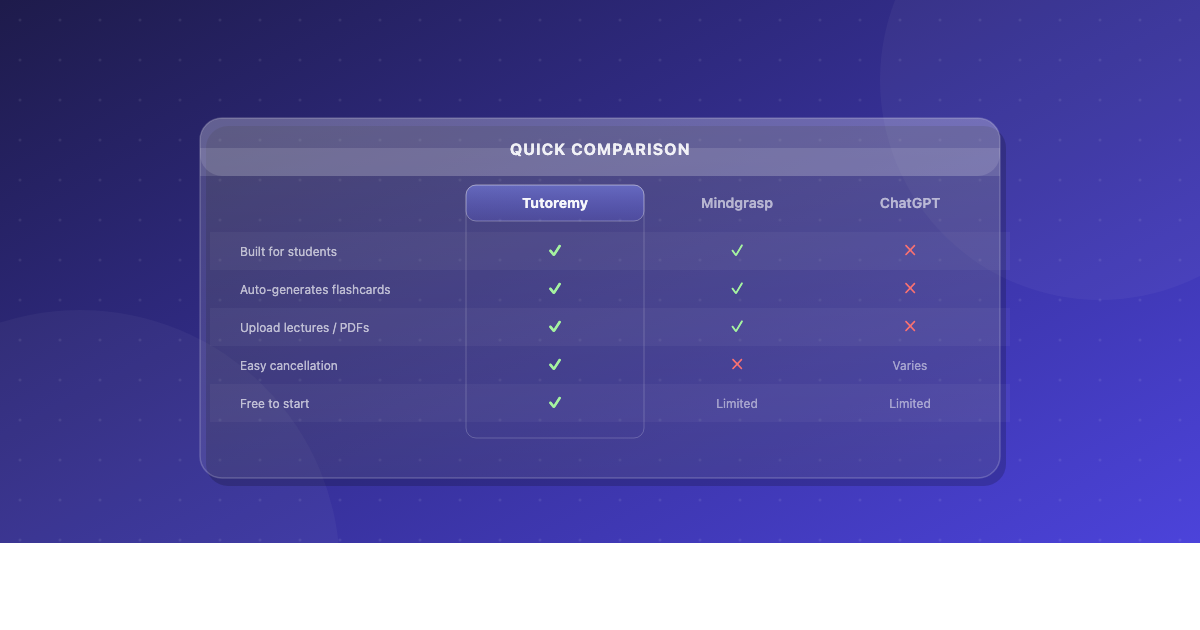
Here's where we honestly fit. Tutoremy is built around the workflow most AP students need but skip: turning your textbook chapters, lecture slides, AP review books, and class notes into flashcards and practice quizzes automatically, then drilling them with spaced repetition.
For AP exams specifically, that means:
- Upload your AP Bio textbook chapter and get a flashcard deck for the unit in 30 seconds
- Upload your AP US History review notes and get a quiz on the names, dates, and concepts
- Upload your AP Chem reaction-types reference sheet and get drilled on every reaction
- Convert your APUSH SAQ practice into reviewable flashcards
Tutoremy has a real free tier — no trial timer, no credit card. The free tier handles all of these.
When Tutoremy isn't the right answer: for the actual full-length AP practice exam experience, use AP Classroom or a published AP review book. Tutoremy is the content-drilling layer that sits next to those — it doesn't replace the official practice tests.
4. AP Review Books (Princeton Review, Barron's, 5 Steps to a 5)
The published AP review books are still essential. Most students buy one for each AP they're taking (
- Princeton Review — usually the most accessible writing, good explanations, slightly easier than the real exam
- Barron's — more comprehensive, harder than the real exam, denser
- 5 Steps to a 5 — middle ground, good for in-class supplement
Pick one. Don't buy all three for the same subject — they overlap heavily and the marginal value of the second book is small.
The reason these books still beat free online resources: the practice tests in the back. The full-length practice exams are written to mimic real AP exams in length, format, and difficulty, and you need to take at least 2–3 of them before the real exam.
5. Knowt or Quizlet — for community-made AP study sets
Hundreds of community-made flashcard sets exist for every AP subject — usually made by students who took the exam in previous years. Knowt is the better option in 2026 (free Learn mode, imports Quizlet sets). Search for "AP [Subject] [Unit]" and you'll find dozens of decks made by students who took the same class.
The honest read: community decks are hit or miss. Some are excellent. Some have errors. Use them as a starting point, not as your only source.
Where the tool choice changes by subject
AP Bio, AP Chem, AP Environmental Science
Heavy on memorization (terms, processes, formulas, named cycles) plus some calculation. Tool stack:
- AP Classroom + Khan Academy for learning
- A review book (Princeton or Barron's) for full-length practice
- Tutoremy or Anki for the high volume of memorization (especially for AP Bio's enormous vocabulary load)
- Tutoremy free guides for specific topics like cellular respiration, the periodic table, or ecosystem dynamics — see the Resources section below
AP Calc AB / BC, AP Statistics
Procedural — you have to actually solve problems, not just memorize. Tool stack:
- Khan Academy is the gold standard for AP Calc and AP Stats specifically
- Princeton Review or Barron's for full-length practice
- Wolfram Alpha and Symbolab for stepping through problem solutions
- Tutoremy is less central here — flashcards don't teach problem-solving; problem-solving teaches problem-solving. Use Tutoremy only for the formula memorization piece.
AP US History, AP World History, AP European History, AP Government
Massive content, lots of names, dates, events, themes. Tool stack:
- AP Classroom + Khan Academy for learning the chronology
- Heimler's History on YouTube — basically essential for APUSH and AP World, written by an AP teacher, free
- A review book for full-length practice
- Tutoremy for the names/dates/events memorization (this is one of the strongest fits — historical content is exactly what flashcards are best for)
- For DBQ (document-based question) and LEQ (long essay question) practice, you need writing practice, not flashcards
AP English Language, AP English Literature
Less about memorization, more about analysis and writing. Tool stack:
- AP Classroom for the official rubrics and sample essays
- Practice writing under timed conditions (this is the only thing that improves your essay scores)
- A review book for the multiple-choice practice
- Tutoremy for the smaller memorization piece (literary terms, rhetorical devices, the specific texts on the reading list for AP Lit)
AP Psychology
One of the most "Tutoremy-friendly" APs because so much of it is terminology and named concepts. Tool stack:
- AP Classroom + Khan Academy
- A review book
- Tutoremy for the vocabulary and famous-experiments memorization (heavy fit)
- Tutoremy free guides on cognitive psych, biological bases of behavior, etc. — see Resources
AP Computer Science (A and Principles)
A different kind of AP — coding, not memorization. Tool stack:
- AP Classroom + Khan Academy
- CodeStepByStep and Practice-it for actual coding practice
- A review book
- Tutoremy is less central — flashcards on syntax don't help you code. Use it only for the vocabulary section (Big O, data structures, algorithms terminology).
A realistic AP prep schedule
Most students should think about AP prep in three phases:
Phase 1: During the year (Sep–Mar)
- Use AP Classroom and your textbook to learn the material as it's taught in class
- Take notes (or record lecture audio for later review)
- After each unit, convert your notes into flashcards (use Tutoremy or Anki) and drill them across the unit
- Take the unit progress checks in AP Classroom
- Do not skip homework — homework problems are how you build the procedural skills exam day will test
Phase 2: April through early May (focused review)
- Buy a review book if you haven't already
- Take a full-length practice exam from the book to set a baseline
- Identify the 2–3 weakest units; drill those for 1–2 weeks each
- Take a second full-length practice exam
- Review any remaining weak areas
- Take a third full-length practice exam under real conditions
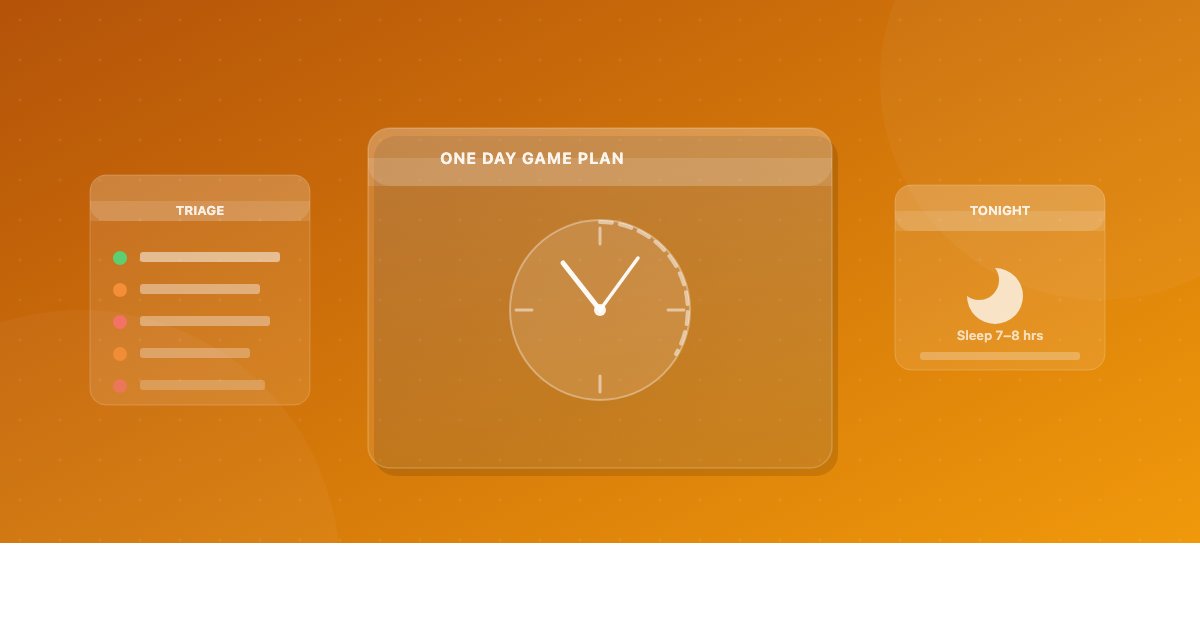
Phase 3: The week of the exam
- Light review only — no new content
- Rerun flashcards on your weakest unit one more time
- Take care of sleep and food more than anything else
- The night before: walk away from prep, sleep 8 hours
The students who score 5s are not the ones who crammed the week before. They're the ones who did consistent active recall throughout the year, took 2–3 full-length practice exams in April, and slept before the test.
What to ignore
A few things that won't move your AP score:
- Watching one YouTube video and then declaring you've "studied" the unit. Watching is not studying. You have to retrieve.
- Buying multiple review books for the same subject. They overlap heavily. Pick one.
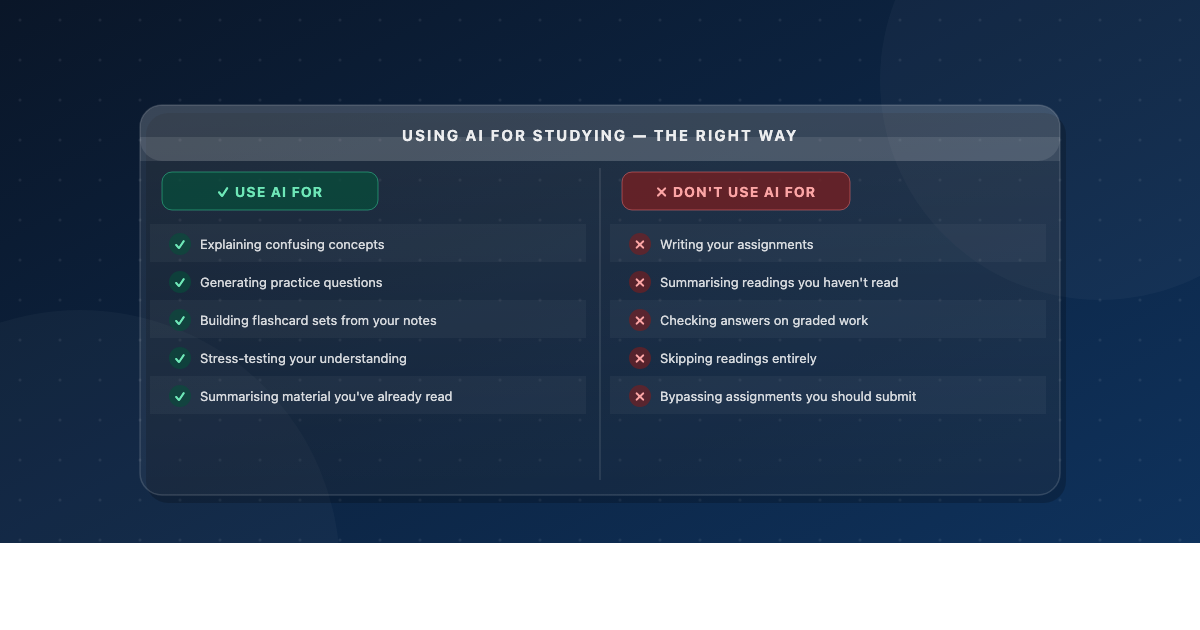
- "AI essay generators" for the FRQ sections. They produce mediocre essays that AP graders are increasingly trained to spot, and the content of an FRQ response matters more than the polish.
- Last-minute cramming. AP exams are too content-heavy to cram. If you're a week out and haven't started, focus on the highest-value 2–3 units, not all of them.
Already prepping for an AP?
Tutoremy has free reference guides on dozens of topics that map directly to the AP curriculum — biology, chemistry, math, US history, English, psychology, economics, and more. Browse the full library at tutoremy.ai/resources.
TL;DR
| Tier | Tool | Use |
|---|---|---|
| Official | AP Classroom + AP Daily | Real practice, official content |
| Free instruction | Khan Academy AP courses | Self-study and review |
| Practice tests | Princeton Review / Barron's / 5 Steps to a 5 | Full-length practice |
| Memorization | Tutoremy or Anki + Knowt | Content drilling, active recall |
| History-specific | Heimler's History on YouTube | APUSH, AP World, AP Euro |
| Math-specific | Wolfram Alpha, Symbolab | Problem-solving help |
The honest read: AP prep is mostly about consistent active recall throughout the year + 2–3 full-length practice tests in April. Everything else is auxiliary.
---
Tutoremy turns AP textbook chapters, review notes, and class slides into flashcards and quizzes automatically — built around the active recall and spaced repetition science the highest-scoring AP students rely on. Real free tier, no trial timer, no credit card.