Research Skills
Research skills are the essential abilities to effectively find, evaluate, synthesize, and present information from various sources to support an argument or answer a question. Mastering these skills will not only lead to better grades on essays and projects but also prepare you for college-level work, enhance your critical thinking, and improve your communication in all areas of life.
This guide covers crafting research questions, evaluating sources with the CRAAP test, integrating evidence with analysis, MLA citation basics, avoiding plagiarism, worked examples from classic literature, and a practice quiz to test your understanding.
1Introduction
From analyzing a poem to writing a persuasive essay, strong research skills empower you to build credible arguments and articulate your ideas with confidence. Whether you are exploring literary themes, investigating historical context, or supporting a thesis with scholarly evidence, the ability to find, evaluate, and synthesize information is fundamental to academic success.
This guide will equip you with the tools and techniques to navigate the research process from start to finish, turning even the most daunting assignment into an opportunity to showcase your analytical prowess.
Imagine you're tasked with writing an essay arguing how symbolism is used in Lord of the Flies. Without solid research skills, you might struggle to find insightful literary criticism, understand how to properly quote and cite scholarly analysis, or even formulate a strong, defensible thesis statement. Learning these skills helps you navigate this challenge with clarity and confidence.
Every successful research project rests on four pillars: a focused research question, credible sources evaluated with the CRAAP test, effective evidence integration with thorough analysis, and proper citation to maintain academic integrity.
2Key Definitions
Research Foundations
Research Question
A clear, focused, and arguable question that guides your research and inquiry. E.g., "How does Shakespeare use the motif of light and darkness to develop the theme of forbidden love in Romeo and Juliet?"
Thesis Statement
A concise sentence, usually in the introduction, that presents your main argument or claim to be supported by evidence throughout the essay.
Credibility
The quality of being believable or trustworthy. A peer-reviewed article in a scholarly journal is generally more credible than an anonymous blog post.
Bias
A prejudice in favor of or against one thing, person, or group compared with another, usually in a way considered to be unfair. E.g., a political blog presenting only one side.
Source Types
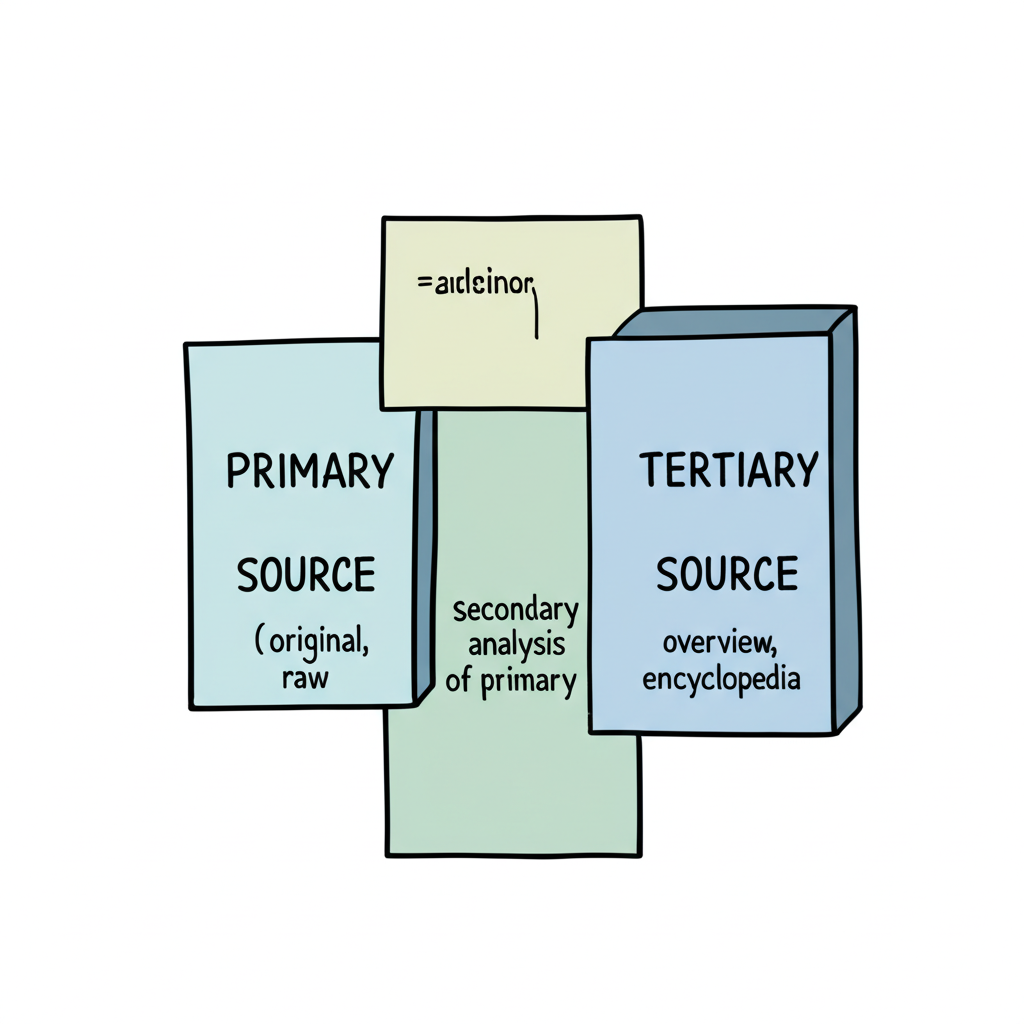
Primary Source
Original, first-hand information created at the time of an event. E.g., The Great Gatsby (the novel itself), a historical letter, a photograph, a speech.
Secondary Source
An analysis or interpretation of primary sources. E.g., a literary criticism article analyzing The Great Gatsby, a biography of F. Scott Fitzgerald.
Tertiary Source
A compilation of primary and secondary sources providing an overview. E.g., an encyclopedia entry, a textbook summary. Generally not used for academic research.
Using Sources
Quoting
Using the exact words from a source, enclosed in quotation marks, and properly cited. E.g., As Orwell states, "Who controls the past controls the future" (Orwell 32).
Paraphrasing
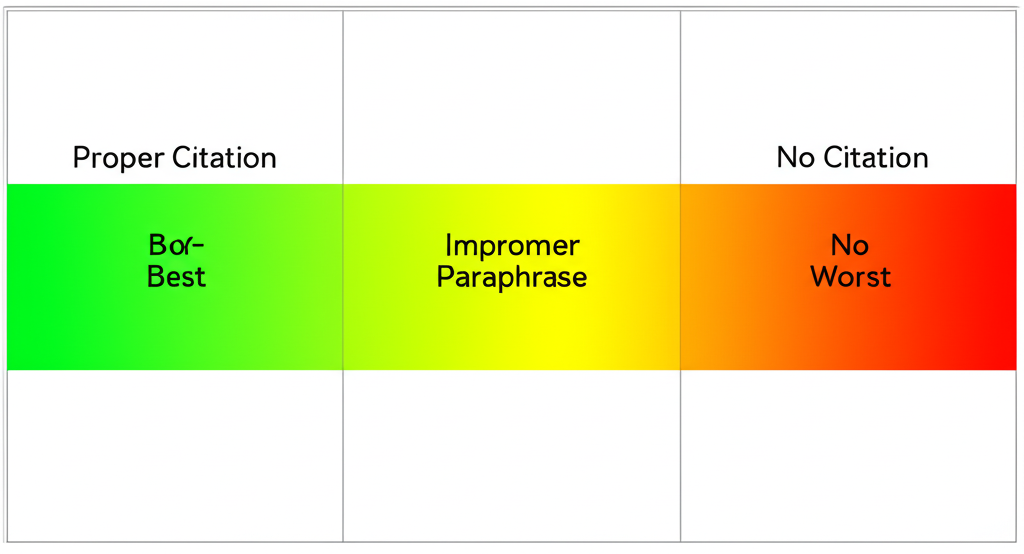
Restating someone else's ideas in your own words, maintaining the original meaning, and still requiring a citation.
Summarizing
Condensing the main points of a text into a shorter version using your own words, still requiring a citation.
Synthesis
Combining information from multiple sources to form a new, cohesive understanding or argument. Not just summarizing but finding connections.
Citation & Research Tools
In-text Citation
A brief reference within the body of your essay that directs readers to the full source entry. E.g., (Orwell 32) or (Lee 98).
Works Cited Page
A complete list of all sources cited in your essay, formatted according to a specific style guide such as MLA or APA.
Plagiarism
Presenting someone else's words or ideas as your own without proper acknowledgment. A serious academic offense that can result in failing grades or disciplinary action.
Boolean Operators
Words like AND, OR, NOT used in search engines and databases to refine results. E.g., "Shakespeare AND symbolism" finds results with both terms.
Database
An organized, searchable collection of information curated for academic research. E.g., JSTOR, EBSCOhost, Gale Literature Criticism.
Peer Review
The process by which scholarly work is evaluated by other experts in the same field. Peer-reviewed articles are generally highly credible.
3Crafting Your Research Question & Thesis
Before you dive into a sea of information, you need a compass and a map. Your research question acts as your compass, guiding your search, while your thesis statement is your map, outlining the journey of your argument. A strong research project starts not with answers, but with a well-formed question.
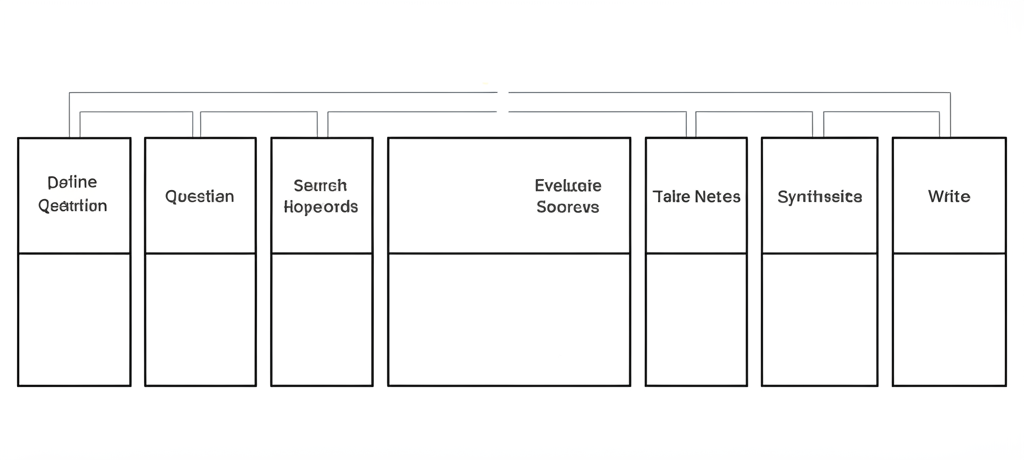
Step-by-Step: Developing Your Research Question
1. Choose a Broad Topic
Start with an area of interest from your assigned text or subject. E.g., Symbolism in Lord of the Flies.
2. Brainstorm Initial Questions
Ask general questions about your topic. "What is symbolism in Lord of the Flies?" is too broad. "What symbols are in Lord of the Flies?" is descriptive, not analytical.
3. Narrow to a Focused Research Question
Use words like "how," "why," "to what extent." E.g., "How does William Golding use the symbols of the conch and Piggy's glasses to illustrate the boys' descent from civilization into savagery?"
4. Develop a Working Thesis Statement
Formulate a provisional answer. E.g., "In Lord of the Flies, Golding demonstrates humanity's inherent savagery through the gradual loss of the conch's authority and the shattering of Piggy's glasses, symbolizing the boys' irreversible abandonment of reason and order."
Applied Example: To Kill a Mockingbird
Broad Topic:
Justice in To Kill a Mockingbird.
Initial Questions:
"What is justice?" "Is Tom Robinson innocent?"
Focused Research Question:
"How does Harper Lee use the trial of Tom Robinson to critique the social and racial injustices prevalent in the American South during the 1930s?"
Working Thesis:
"Through the unjust conviction of Tom Robinson, Harper Lee exposes the deep-seated racial prejudice and hypocrisy of Maycomb society, arguing that true justice is often sacrificed in the face of ingrained social biases."
- Is my research question too broad or too narrow?
- Does my research question require more than a "yes" or "no" answer?
- Does my thesis statement clearly state my main argument?
- Is my thesis statement arguable — could someone reasonably disagree?
- Does my thesis provide a clear direction for my essay?
4Finding & Evaluating Credible Sources
Once you have a solid research question and a working thesis, the next step is to gather information. But not all information is created equal. Learning to find and evaluate credible sources is paramount to building a strong, trustworthy argument.
Techniques for Finding Sources
Keyword Searching
Identify key terms from your research question and thesis. Use synonyms and related concepts. For a question about Shakespeare's light and darkness motifs, try: "Shakespeare," "Romeo and Juliet," "light imagery," "darkness motif," "love theme."
Boolean Operators
AND narrows results (all terms present). OR broadens results (any term present). NOT excludes terms. E.g., "Romeo and Juliet NOT film adaptations."
Library Databases
Academic databases like JSTOR, EBSCOhost, Gale Literature Criticism, and ProQuest contain peer-reviewed journal articles and scholarly essays. These are goldmines for credible sources.
Google Scholar & University Websites
Google Scholar indexes scholarly literature across disciplines. University websites (.edu) often contain research guides and faculty publications.
Evaluating Source Credibility: The CRAAP Test
The CRAAP Test is a widely used method to quickly assess the reliability of a source, especially online. Apply each criterion to determine whether a source is trustworthy enough for academic research.
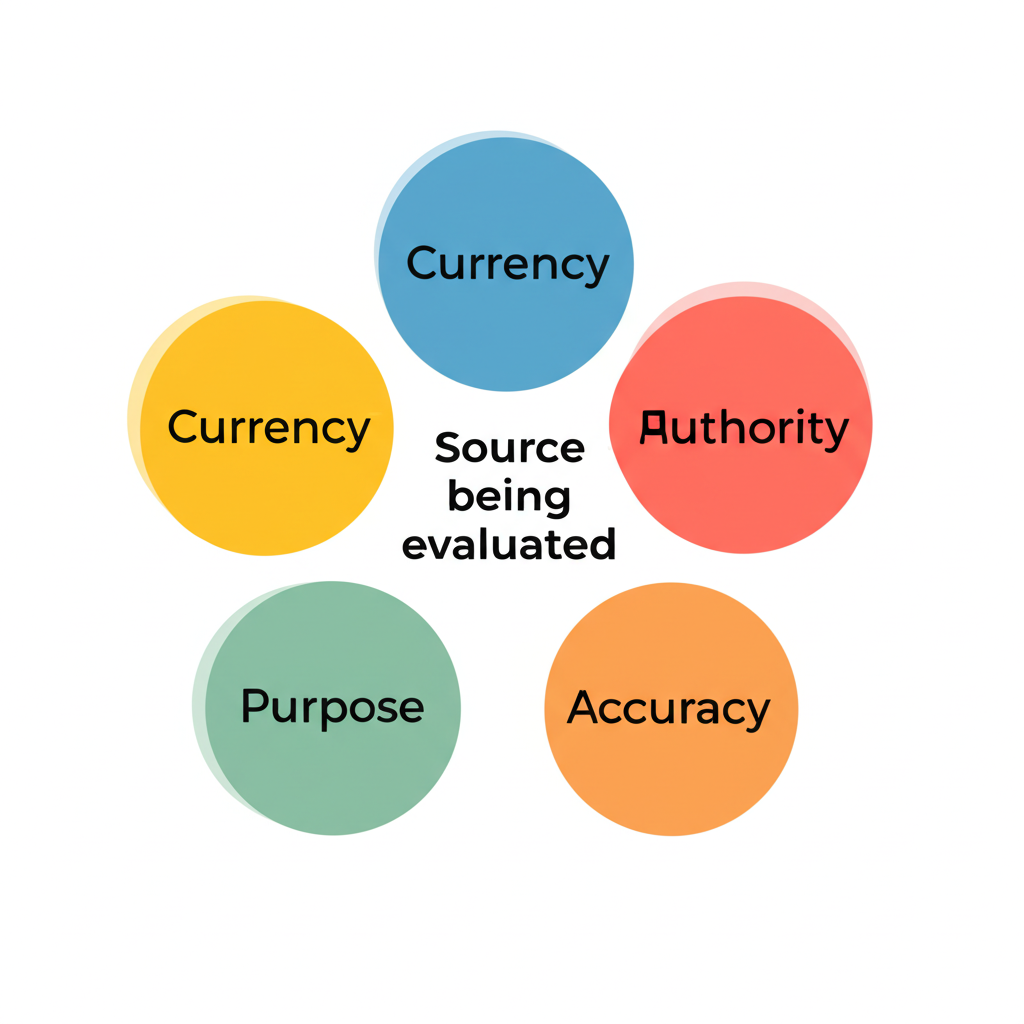
C - Currency
How recent is the information? A literary analysis published recently may offer fresh perspectives, while a very old article might be outdated unless you're researching early interpretations.
R - Relevance
Is the information relevant to your research question? Does it help build your argument? An article directly discussing the theme of oppression in 1984 is highly relevant; a broad article about totalitarian regimes might be too unfocused.
A - Authority
Who is the author? What are their credentials? Are they an expert in the field? An article by a professor of English literature in a peer-reviewed journal has high authority; an anonymous blog post does not.
A - Accuracy
Is the information truthful, verifiable, and free from error? Are there citations? A source that provides evidence and cites its own sources is more accurate than one with sweeping generalizations and no supporting evidence.
P - Purpose
Why was this information published? Is it to inform, persuade, entertain, or sell? A scholarly article aiming to inform and analyze is preferable to a highly opinionated blog designed to persuade without balanced evidence.
Practice Scenario: Evaluating Online Sources
You're researching the theme of power in 1984. You find two sources:
Source 1: "Big Brother's Brainwashing" on DystopianLitCrit.com
Author: "Literary Enthusiast" (anonymous). No citations. Many ads. Highly opinionated with emotional language.
CRAAP verdict: Low authority, low accuracy, questionable purpose. Not recommended.
Source 2: "Surveillance and Control in Orwell's Nineteen Eighty-Four" on JSTOR.org
Author: Dr. Eleanor Vance, Professor of 20th-Century Literature. Peer-reviewed academic journal article with extensive citations.
CRAAP verdict: High authority, high accuracy, academic purpose. Excellent source.
In an exam, if given a passage to evaluate, look for: Author/Publisher (recognized expert or institution?), Tone (objective or emotional?), Evidence (facts and citations or just opinions?), and Date (reasonably current?).
5Integrating Evidence & Crafting Arguments
Finding sources is just the beginning. The real skill lies in critically analyzing that information and integrating it seamlessly into your own arguments. This is where you move beyond simply summarizing and into sophisticated analysis.
The Body Paragraph Structure: P.I.E. / T.E.A.
A well-structured body paragraph is crucial for integrating evidence effectively. Use the P.I.E. structure (Point, Illustration, Explanation) or T.E.A. (Topic Sentence, Evidence, Analysis):
1. Topic Sentence
Introduces the main point of the paragraph, which directly supports your thesis.
2. Context / Signal Phrase
Briefly introduces the evidence, setting the scene and telling the reader who said it and where it came from.
3. Evidence
The direct quote, paraphrase, or summary from your source, properly cited with an in-text citation.
4. Analysis / Explanation
The most crucial part! Explain how the evidence supports your topic sentence and thesis. Don't just rephrase the quote — dissect it, explore its implications, and connect it to your argument.
5. Concluding Sentence
Summarizes the paragraph's main idea and often transitions to the next paragraph.
Effective vs. Ineffective Integration
Using The Great Gatsby to demonstrate proper evidence integration:
Ineffective: Quote Dumping (No Analysis)
"Gatsby believed in the green light, the orgastic future that year by year recedes before us" (Fitzgerald 180). This shows Gatsby's dream.
Effective: Integration with Thorough Analysis
One of the most poignant symbols of the decaying American Dream is Jay Gatsby's relentless pursuit of an unattainable past, epitomized by the green light across the bay. As F. Scott Fitzgerald concludes the novel, he reflects on Gatsby's enduring but ultimately futile hope: "Gatsby believed in the green light, the orgastic future that year by year recedes before us" (Fitzgerald 180). This evocative passage reveals that Gatsby's dream, tied to the materialistic pursuit of Daisy and his past, is a perpetually receding illusion. The "orgastic future" is forever out of reach, highlighting how the dream itself has become corrupted, transforming from a promise of self-improvement into a desperate attempt to reclaim what is lost.
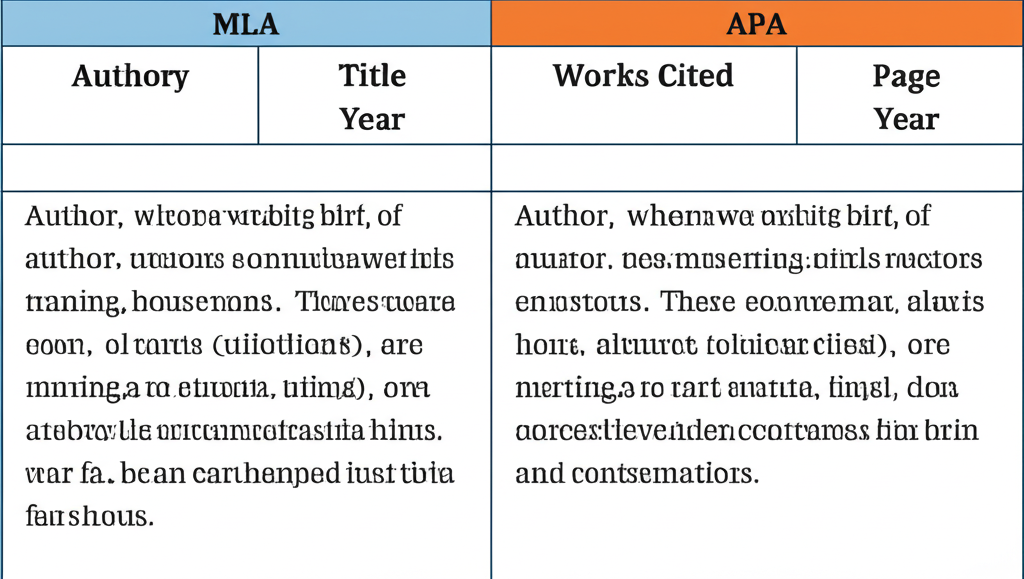
Sample Paragraph Breakdown
Topic Sentence: "One of the most poignant symbols... is Jay Gatsby's relentless pursuit of an unattainable past, epitomized by the green light across the bay."
Signal Phrase: "As F. Scott Fitzgerald concludes the novel, he reflects on Gatsby's enduring but ultimately futile hope:"
Evidence: The direct quote (Fitzgerald 180).
Analysis: "This evocative passage reveals... The 'orgastic future' is forever out of reach, highlighting how the dream itself has become corrupted..."
6Putting It All Together
Research skills aren't isolated — they weave into every aspect of your English Language Arts education. From understanding complex texts to crafting persuasive arguments, they are foundational.
Connections to Other ELA Skills
Reading Comprehension
You need to understand your sources thoroughly before you can evaluate and integrate them effectively.
Argumentation
Research provides the evidence to build strong, defensible arguments in your essays.
Rhetorical Analysis
Evaluating sources often involves analyzing their rhetorical strategies (ethos, pathos, logos) and identifying bias.
Organization & Outlining
Structuring your research paper requires logical organization of ideas and evidence into coherent paragraphs and sections.
Real-World Applications
Informed Decision-Making
Whether buying a product, choosing a college, or voting, you need to research and evaluate information critically.
Problem-Solving
Research helps you understand issues and find solutions in any field, from science to business.
Career Success
Many professions require research, from marketing to science to journalism to law.
Civic Engagement
Understanding current events and political issues requires evaluating diverse sources and distinguishing fact from opinion.
Exam Strategies
1. Outline Your Argument
Even for a timed essay, quickly jot down your thesis and main points, identifying where textual evidence will fit.
2. Prioritize Evidence
Choose the strongest, most relevant pieces of evidence to support your claims. You won't have time for everything.
3. Practice Integration
Work on smoothly introducing quotes and following them with concise, powerful analysis.
4. Know Your Citation Basics
Understand the core elements of in-text citations (Author page number) for texts you've studied.
Self-Assessment Checklist
- ✓Clear Thesis? Is my main argument obvious and compelling?
- ✓Relevant Sources? Have I used credible sources that directly support my thesis?
- ✓Proper Integration? Are quotes and paraphrases introduced smoothly and followed by thorough analysis?
- ✓No Plagiarism? Have I cited every piece of information that isn't my original idea or common knowledge?
- ✓Logical Flow? Do my paragraphs connect, and does my argument progress clearly?
- ✓Strong Analysis? Do I explain how evidence supports my points, rather than just summarizing?
- ✓Correct Citations? Is my Works Cited page formatted correctly (e.g., MLA)?
7Worked Examples
Example 1: Developing a Focused Research Question
You're assigned an essay on Lord of the Flies and want to explore the theme of human nature. Formulate a strong, focused research question.
Step 1: Begin with a broad question: "What does Lord of the Flies say about human nature?" — Too broad; leads to a summary, not an argument.
Step 2: Identify key elements: Characters (Ralph = order, Jack = savagery, Piggy = intellect). Symbols (conch, fire, beast).
Step 3: Focus on the relationship between elements and theme: "How do Ralph and Jack's leadership styles reveal Golding's view on human nature when civilization is removed?"
Step 4 — Refined Question: "To what extent does William Golding use the contrasting leadership of Ralph and Jack to argue that humanity's innate savagery, rather than societal influence, ultimately governs human nature in Lord of the Flies?"
Key Insight: A strong research question is specific, arguable, and requires analytical thought, moving beyond mere description.
Example 2: Evaluating a Source with the CRAAP Test
You are researching the impact of propaganda in 1984. You find a website titled "Orwell's Truths" with an article "Big Brother's Brainwashing." Evaluate its credibility.
Step 1 — Currency: Published October 2012. Potentially outdated if newer scholarship exists.
Step 2 — Relevance: Topic is relevant to propaganda in 1984, but relevance alone doesn't guarantee credibility.
Step 3 — Authority: Anonymous author on a personal blog platform. No credentials provided. Low authority.
Step 4 — Accuracy: Highly opinionated with no citations or supporting evidence. Low accuracy.
Step 5 — Purpose: Likely to express personal opinion and generate ad revenue. Not academic. This source fails most CRAAP criteria and should not be used.
Key Insight: The CRAAP Test provides a systematic way to quickly assess the trustworthiness of any source, especially online.
Example 3: Integrating a Quote with Analysis
Integrate a quote from Of Mice and Men into a paragraph discussing the theme of loneliness and isolation, providing sufficient analysis.
Step 1 — Topic Sentence: "The pervasive loneliness on the ranch often drives characters to profound despair, highlighting humanity's fundamental need for companionship."
Step 2 — Signal Phrase: "One of the clearest expressions of this desperate need comes from Crooks, the isolated stable buck, who laments the psychological toll of solitude:"
Step 3 — Quote: "'A guy needs somebody — to be near him.' He stopped. 'I tell ya, a guy gets too lonely an' he gets sick'" (Steinbeck 72).
Step 4 — Analysis: "Crooks's poignant declaration reveals that loneliness is not merely an emotional state but a debilitating illness, capable of eroding one's mental and physical well-being. His emphasis on 'somebody — to be near him' underscores the basic human craving for connection."
Step 5 — Conclusion: "This insight reinforces Steinbeck's broader message that without meaningful relationships, individuals are vulnerable to despair and the erosion of their spirit."
Key Insight: Analysis is the most important part of integrating evidence; it's where you explain how the evidence supports your claim.
Example 4: Creating a Works Cited Entry (MLA Format)
Create a correct MLA Works Cited entry for The Great Gatsby by F. Scott Fitzgerald, published by Scribner in 2004.
Step 1: Start with author's last name, first name, period: Fitzgerald, F. Scott.
Step 2: Add the title italicized, period: Fitzgerald, F. Scott. The Great Gatsby.
Step 3: Add publisher, comma: Fitzgerald, F. Scott. The Great Gatsby. Scribner,
Step 4 — Final entry: Fitzgerald, F. Scott. The Great Gatsby. Scribner, 2004.
Key Insight: Consistency and attention to detail are crucial in citation formatting. Always refer to the latest MLA handbook or your teacher's guidelines.
8Memory Aids & Mnemonics
"CRAAP" for Source Evaluation: Currency, Relevance, Authority, Accuracy, Purpose
Apply these five criteria to every source you consider using. If a source fails multiple criteria, find a better one. Remember: if it doesn't pass the CRAAP test, it's probably not worth citing.
"P.I.E." for Body Paragraphs: Point, Illustration, Explanation
Every body paragraph should state your point (topic sentence), illustrate it with evidence (quote or paraphrase with citation), and explain how the evidence supports your thesis.
"ABC" for Citation: Author, Book/Article Title, Citation Details
When building a Works Cited entry, always start with the author, then the title of the work, then the publication details (publisher, date, URL, etc.).
"So what?" — The question every analysis must answer.
After presenting evidence, always ask yourself "so what?" and "why is this important?" If your analysis doesn't answer these questions, dig deeper. Connect it to broader themes, character development, or the author's purpose.
"When in doubt, cite it out."
If you're unsure whether something needs a citation, err on the side of caution and cite it. It's always better to over-cite than to accidentally plagiarize. The only exception is common knowledge that any educated reader would know.
9Common Mistakes
Using unreliable sources without evaluation
Don't grab the first Google result without checking its credibility. Always apply the CRAAP test before using any source in your research paper.
Wrong: Citing a random blog post with no author credentials. Right: Using peer-reviewed journal articles from JSTOR or EBSCOhost.
Writing research questions that are too broad or too narrow
A good research question should be specific enough to be manageable but broad enough to require genuine inquiry and analysis.
Wrong: "What is symbolism?" (too broad, not analytical). Right: "How does Golding use the conch to symbolize the decline of democratic order in Lord of the Flies?"
Dropping quotes without introduction or analysis ("quote bombing")
Always introduce your quotes with context using a signal phrase, and always follow them with thorough analysis. Never leave a quote hanging.
Wrong: "Gatsby believed in the green light." This shows his dream. Right: Use a signal phrase, embed the quote, and provide multiple sentences of analysis explaining how and why the evidence supports your thesis.
Confusing paraphrasing with plagiarism
Simply swapping a few words or rearranging the sentence structure is not true paraphrasing. You must completely restate the idea in your own words and still cite the source.
Wrong: Changing "the green light represents hope" to "the green light symbolizes hope" (too close to the original). Right: Fully rewrite in your own sentence structure and words, then add the in-text citation.
Summarizing instead of analyzing
Don't just retell what happens or rephrase what a source says. After presenting evidence, explain how it proves your point and why it's significant, linking it back to your thesis.
Wrong: "The article says symbolism is important in literature." Right: "Dr. Vance's analysis of the green light imagery reveals how Fitzgerald uses this symbol to critique the hollowness of materialism, connecting directly to the thesis that the American Dream is ultimately corrupt."
Forgetting to cite paraphrased or summarized information
Citations are required not only for direct quotes but also for paraphrased ideas and summaries. The only exception is common knowledge.
Wrong: Paraphrasing an author's argument without any in-text citation. Right: Include (Author page) even when using your own words to express someone else's idea.
Incorrect Works Cited formatting
Pay close attention to the specific formatting requirements of your citation style (MLA, APA, etc.). Common errors include incorrect punctuation, missing italics on titles, and wrong ordering of elements. Always double-check against a current style guide.
10Quick Revision Summary
- ✓Research skills are the abilities to find, evaluate, synthesize, and present information from various sources to support your argument.
- ✓A strong research question is specific, arguable, and requires analysis — not a simple "yes" or "no" answer.
- ✓Your thesis statement is your main argument, directly answering your research question and guiding the entire essay.
- ✓Primary sources are original materials; secondary sources analyze or interpret primary sources; tertiary sources compile information.
- ✓The CRAAP Test (Currency, Relevance, Authority, Accuracy, Purpose) helps you evaluate source credibility systematically.
- ✓Use Boolean operators (AND, OR, NOT) and academic databases (JSTOR, EBSCOhost) to find scholarly sources efficiently.
- ✓Follow the P.I.E. structure: Point (topic sentence), Illustration (evidence), Explanation (analysis) for every body paragraph.
- ✓Analysis explains how and why evidence supports your claim — never "quote bomb" without explanation.
- ✓Plagiarism includes using ideas without citation, even when paraphrasing. When in doubt, cite it.
- ✓A properly formatted Works Cited page lists all sources alphabetically using the required citation style (e.g., MLA).
- ✓Synthesis combines information from multiple sources to form new understanding — it's more than just summarizing each source individually.
- ✓Strong research skills transfer to real-world applications including decision-making, problem-solving, career success, and civic engagement.
Frequently Asked Questions
- How do I know if my research question is focused enough?
- A focused research question should be specific enough to be manageable within the scope of your assignment, yet broad enough to allow for genuine inquiry. It should require analysis (using words like "how," "why," or "to what extent"), be arguable (someone could reasonably disagree), and not be answerable with a simple "yes" or "no." If you can answer it in one sentence without evidence, it's too narrow. If it would take an entire book, it's too broad.
- What is the difference between a primary source and a secondary source?
- A primary source is original, first-hand material created at the time of an event or by the creator of a work — such as a novel, diary, photograph, or speech. A secondary source analyzes, interprets, or discusses primary sources — such as a literary criticism article, a biography, or a textbook chapter. For English/Language Arts research, the literary text itself is your primary source, while scholarly articles analyzing that text are secondary sources.
- How do I avoid plagiarism when paraphrasing?
- To properly paraphrase, read the original passage, set it aside, and write the idea in your own words and sentence structure without looking at the original. Then compare your version to the original to ensure you haven't accidentally copied phrases. Even when paraphrasing successfully, you must still include an in-text citation because the idea originated from another author. Simply swapping a few words or rearranging the sentence is not true paraphrasing and can still constitute plagiarism.
- What is the CRAAP test and when should I use it?
- The CRAAP test is a method for evaluating source credibility. It stands for Currency (how recent is the information?), Relevance (does it relate to your research question?), Authority (who is the author and what are their credentials?), Accuracy (is the information supported by evidence and verifiable?), and Purpose (why was it published — to inform, persuade, entertain, or sell?). Use it whenever you find a new source, especially online sources, to determine whether it's reliable enough for academic research.
- How much analysis should I include after a quote in my essay?
- A good rule of thumb is that your analysis should be at least as long as, if not longer than, the quote itself. After presenting a quote, you should explain what the quote means in the context of your argument, identify specific words or phrases that are significant, connect the evidence to your topic sentence and thesis, and explain why it matters. Never leave a quote standing alone without analysis — this is often called "quote bombing" and is a common mistake.
- What citation style should I use for high school English papers?
- Most high school English/Language Arts classes use MLA (Modern Language Association) format. MLA uses in-text parenthetical citations with the author's last name and page number — for example, (Fitzgerald 180) — and requires a Works Cited page at the end of your paper listing all sources in alphabetical order. Always check with your teacher for their preferred citation style, as some may require APA or Chicago format instead.
Practice Quiz
Test your understanding — select the correct answer for each question.
1.What is usually the *first* step in the research process?
2.Which of the following is an example of a *primary* source?
3.When evaluating a website for research, what does the 'A' in the CRAAP test (Currency, Relevance, Authority, Accuracy, Purpose) primarily help you determine?
4.What is plagiarism?
5.When is it *not* necessary to cite a source?
6.What is the main purpose of citing your sources in a research paper?
7.After formulating a research question, what is a helpful next step to begin gathering information?
8.Which of the following is an example of a *secondary* source?
9.Why is it important to consider the potential bias of a source?
10.You find a great paragraph in an article that perfectly explains a concept. You want to rewrite it in your own words in your research paper. Do you need to cite the original article?
Final Study Advice
- 1.Start Early: Good research takes time. Begin your search for sources well before the deadline so you can evaluate, read, and integrate them thoughtfully.
- 2.Use Your Library: School and public librarians are invaluable resources. They can help you navigate databases, find credible sources, and refine your search strategies.
- 3.Annotate Your Sources: As you read, highlight key passages and write notes in the margins about how each piece of evidence might support your thesis.
- 4.Outline Before Writing: A solid outline with your thesis, topic sentences, and planned evidence ensures your argument flows logically before you write a single paragraph.
- 5.Practice Under Timed Conditions: For exams, practice quickly outlining a research-informed argument. Spend 5-10 minutes planning before writing to ensure coherence.