Vocabulary & Word Study
Vocabulary & Word Study is the art and science of understanding, analyzing, and effectively using words to unlock meaning, express ideas, and persuade audiences. It goes far beyond memorizing definitions — it's about recognizing how authors craft their messages with precision and how you, as a writer, can do the same.
This guide covers denotation and connotation, context clues, close reading techniques, literary and rhetorical devices, figurative language analysis, worked examples from classic literature, and a practice quiz to test your understanding.
1Introduction
Mastering vocabulary and word study is crucial for your success in high school and beyond. It leads to better grades in English classes by enabling deeper textual analysis and more sophisticated essay writing. It's a cornerstone of college readiness, as advanced academic work demands a strong command of language. Furthermore, it enhances your communication skills in all aspects of life, allowing you to articulate complex thoughts clearly and persuasively. Ultimately, it sharpens your critical thinking abilities, empowering you to deconstruct arguments, identify bias, and form well-reasoned opinions.
This guide will equip you with the tools to become a word detective and a word architect. You'll learn how to close read texts for subtle nuances in language, identify and analyze literary and rhetorical devices crafted through word choice, understand the grammar that structures effective communication, and apply these insights to write powerful, analytical essays.
Imagine staring at a complex paragraph in a novel, feeling lost and unable to grasp its deeper meaning, struggling to explain why the author chose that particular word. Now, picture yourself confidently dissecting the same passage, pinpointing key vocabulary, explaining its connotations, identifying a metaphor, and articulating exactly how these choices contribute to the story's theme — all while preparing to write an insightful essay that earns you top marks. This guide will help you achieve that confidence.
Vocabulary mastery isn't about memorizing word lists — it's about understanding how words create meaning, recognizing why authors choose specific words, and applying that knowledge to analyze texts and write persuasive essays.
2Key Definitions
Understanding the language of language is the first step. Here are essential terms you'll encounter in your English Language Arts journey.
Word Meaning & Context
Vocabulary
The collection of words known and used by a person or group. E.g., Shakespeare's extensive vocabulary included words like "soliloquy" and "eyeball."
Denotation
The literal, dictionary definition of a word. E.g., the denotation of "home" is a place where one lives.
Connotation
The emotional associations or cultural implications a word carries beyond its literal meaning. E.g., "home" connotes warmth and security, whereas "house" is more neutral.
Context Clues
Hints within a sentence or paragraph that help define a difficult or unfamiliar word. E.g., "The garrulous student, who never stopped talking, was often asked to be quiet."
Figurative Language
Figurative Language
Language that uses words or expressions with a meaning different from the literal interpretation. Includes similes, metaphors, personification, etc. E.g., "Life is a highway" (metaphor).
Simile
A figure of speech comparing two unlike things using "like" or "as." E.g., "He fought like a lion."
Metaphor
A figure of speech comparing two unlike things directly, stating one is the other. E.g., "Juliet is the sun." (Romeo and Juliet)
Personification
Giving human qualities or actions to inanimate objects or abstract ideas. E.g., "The wind whispered secrets through the trees."
Hyperbole
Exaggerated statements or claims not meant to be taken literally. E.g., "I'm so hungry I could eat a horse."
Imagery
Visually descriptive or figurative language appealing to the five senses. E.g., "The fiery sunset painted the sky in streaks of crimson and gold."
Literary Devices
Allusion
An indirect reference to a person, place, event, or literary work. E.g., referring to a strong leader as a "Napoleon."
Symbol
An object, person, or idea that represents something else, often an abstract concept. E.g., the green light in The Great Gatsby symbolizes Gatsby's hopes and dreams.
Irony
A contrast between expectation and reality. Includes verbal (sarcasm), situational (unexpected outcomes), and dramatic irony (audience knows more than characters).
Theme
The central idea, message, or underlying meaning of a literary work — an insight into human nature or society. E.g., prejudice in To Kill a Mockingbird.
Analysis
Examining component parts to understand nature, function, and relationships. In ELA, it means explaining how and why something works, not just what it is.
Rhetorical Appeals
Ethos
Appeal to credibility or character; convincing the audience of the speaker's trustworthiness. E.g., a doctor recommending a treatment.
Pathos
Appeal to emotion; persuading the audience by evoking feelings. E.g., animal shelter commercials showing sad animals.
Logos
Appeal to logic or reason; using facts, statistics, and rational arguments. E.g., presenting scientific data to support a claim.
Essay & Writing Terms
Thesis Statement
A sentence that clearly states the main argument or purpose of your essay. E.g., "Through its vivid depiction of Maycomb's residents, Lee argues that true courage lies in standing up for one's convictions."
Topic Sentence
The sentence that expresses the main idea of a paragraph and directly supports the thesis. E.g., "Scout's early experiences with injustice profoundly shape her developing moral compass."
Rhetoric
The art of effective or persuasive speaking or writing, especially the use of figures of speech and other compositional techniques.
Diction
An author's specific word choices and their cumulative effect on tone, mood, and meaning. Precise diction separates strong writing from vague writing.
3Close Reading for Word Meaning
Close Reading is the careful, sustained interpretation of a text, focusing on individual words, sentences, and structural elements to uncover deeper layers of meaning and understand an author's craft. For vocabulary, it means not just knowing what words mean, but how they mean and why the author chose them.
Close reading is essential for exam prep — standardized tests (SAT, ACT, AP English) heavily rely on your ability to infer meaning from context and analyze authorial choices. It's also the foundation for strong essay writing, enabling you to analyze how authors achieve their effects rather than just summarizing.
The "Word Detective" Approach: Step-by-Step
1. First Pass — Get the Gist
Read the passage or sentence for general understanding. Don't stop for every unfamiliar word — just try to follow the main idea.
2. Second Pass — Identify the Mystery Words
Go back and circle, highlight, or underline any words or phrases that seem unusual, unfamiliar, or particularly impactful. These are your "mystery words."
3. Context Clues — Your First Suspects
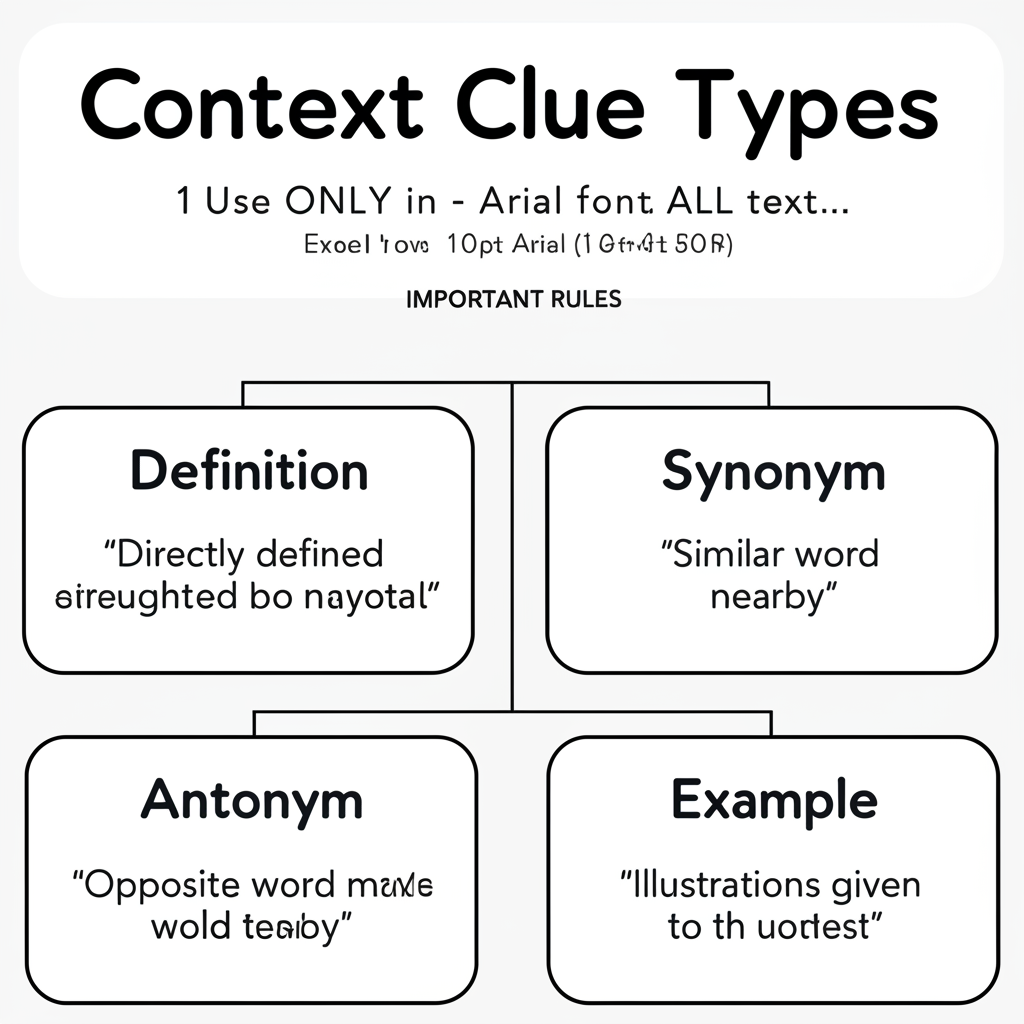
Before reaching for a dictionary, look for clues within the surrounding text. Are there synonyms or antonyms nearby? Is the word explained in the sentence? Does the overall tone or situation suggest a meaning?
4. Connotation vs. Denotation — Beyond the Obvious
Once you have a working definition (denotation), consider the word's connotation. What feelings, ideas, or associations does it evoke? Why might the author have chosen this specific word over a synonym?
5. Author's Purpose — What's the Author Up To?
What effect does this word choice create? How does it contribute to the mood, tone, characterization, or theme? Is it part of a larger pattern (a motif or symbol)?
6. Re-read and Refine
Read the passage again with your new understanding of the key words. Does the meaning deepen? Does it clarify the author's message?
Example: Close Reading in Practice
Consider this line from George Orwell's 1984:
Mystery Word: "hideous"
Context Clues: Paired with "ecstasy of fear and vindictiveness," and leads to desires to "kill, torture, smash faces." This suggests something extremely unpleasant, repulsive, and terrifying.
Denotation: Extremely ugly or repulsive.
Connotation: Beyond just "ugly," "hideous" suggests something monstrous, morally repugnant, horrifying, and unnatural. It implies a profound moral ugliness, not just aesthetic.
Author's Purpose: Orwell could have used "ugly," "terrible," or "awful." By choosing "hideous," he emphasizes the extreme, grotesque, and morally repellent nature of the collective emotion, contributing to the novel's theme of totalitarian control's psychological damage.
If there are no context clues, a dictionary or thesaurus becomes essential. But even then, don't stop at the definition. Consider why the author might use a word that requires a dictionary lookup — perhaps to challenge the reader, introduce a specific nuance, or elevate the formality of the language.
4Literary & Rhetorical Devices
Vocabulary isn't just about individual words — it's about how words are arranged and used to create specific effects. Authors employ literary and rhetorical devices as tools to shape meaning, evoke emotion, and persuade.
Key Literary Devices
Metaphor
A direct comparison between two dissimilar things, stating one is the other. Creates vivid imagery and condenses complex associations.
"Her voice is full of money." — The Great Gatsby. Daisy's voice is equated with wealth, privilege, and the seductive power of old money.
Simile
A comparison using "like" or "as" that draws attention to shared qualities while keeping both things distinct.
"...seemed to flow through the whole group of people like an electric current" — 1984. Compares the spread of emotion to electricity: sudden, powerful, involuntary.
Symbolism
When an object, person, or idea represents something beyond its literal meaning, often an abstract concept or theme.
The green light in The Great Gatsby symbolizes Gatsby's hopes, dreams, and the unattainable American Dream.
Irony
A contrast between expectation and reality. Verbal irony (sarcasm), situational irony (unexpected outcomes), and dramatic irony (audience knows more) all create meaning.
In Romeo and Juliet, Romeo exclaims "O, I am fortune's fool!" — the audience knows his fate is sealed (dramatic irony).
Rhetorical & Persuasive Techniques
Diction (Word Choice)
The specific words an author chooses and their cumulative effect on tone, mood, and meaning. Precise diction is what separates powerful writing from vague writing.
In Lord of the Flies, when Roger "sharpened a stick at both ends," "sharpened" carries a chilling connotation of deliberate malice and preparation for violence.
Syntax (Sentence Structure)
How words and clauses are arranged in sentences. Short, fragmented sentences create urgency; long, complex sentences can convey deep contemplation.
Hamlet's "To be or not to be" soliloquy uses extended, inverted clauses to mirror his prolonged internal struggle and hesitation.
Paradox
A statement that appears contradictory but reveals a deeper truth. Used to challenge assumptions and provoke thought.
"WAR IS PEACE. FREEDOM IS SLAVERY. IGNORANCE IS STRENGTH." — 1984. These paradoxes dismantle logical thought and control perception of reality.
Personification
Attributing human qualities to non-human things, making abstract ideas relatable and imagery more vivid.
"The wind whispered secrets through the trees" — the wind is given human ability to whisper, creating an intimate, mysterious mood.
Effective vs. Ineffective Word Use
Ineffective (Vague)
"The author uses good words to make the reader feel things."
Lacks specificity — which words? What feelings? Why do they matter?
Effective (Precise)
"Orwell's use of 'hideous ecstasy' creates a disturbing oxymoron that conveys the monstrous, involuntary nature of collective hatred under totalitarianism."
Names the device, quotes the text, and explains the effect.
When analyzing literary devices, always follow the Identify → Quote → Analyze framework: name the device, provide a direct quote from the text, and explain how and why it creates meaning. Never just identify a device without explaining its effect.
5Worked Examples
Example 1: Understanding Denotation and Connotation through Context
Read the following sentence and determine the meaning of the word "garrulous" using context clues. Then, explain its denotation and connotation.
Step 1: Identify the target word and context clues. Target: "garrulous." Clues: "who never stopped talking," "often asked to be quiet."
Step 2: Infer the meaning. Based on "never stopped talking" and being "asked to be quiet," "garrulous" likely means excessively talkative.
Step 3: Denotation: Excessively talkative, especially on trivial matters.
Step 4: Connotation: While "talkative" can be neutral, "garrulous" carries a slightly negative connotation, suggesting someone is annoyingly or tiresomely talkative, inconsiderate of others' need for quiet.
Key Insight: Context clues provide immediate access to word meaning, while denotation and connotation deepen our understanding of authorial intent and tone.
Example 2: Analyzing a Metaphor in The Great Gatsby
Analyze the line: "Her voice is full of money." Explain what this metaphor means and what it reveals about Daisy Buchanan.
Step 1: Identify the metaphor. Daisy's voice is compared to money — the abstract quality of a voice is equated with a concrete substance.
Step 2: Analyze the connotations of "money." In the novel, money represents wealth, power, status, luxury, security, allure, privilege, and potentially superficiality or moral emptiness.
Step 3: What it implies about Daisy: Her voice, and by extension her entire persona, radiates wealth, privilege, and the seductive power of old money. It's not just a sound — it's an essence that promises security and luxury.
Step 4: For Gatsby, Daisy represents the ultimate prize, inextricably linked to the American Dream. Her voice, being "full of money," signifies she is the embodiment of everything he desires — a symbol of the unattainable dream he relentlessly chases.
Key Insight: Metaphors condense complex associations into potent images, revealing character motivations and thematic undercurrents through implied comparisons.
Example 3: Analyzing Diction and Rhetoric in 1984
Examine the Party slogans: "WAR IS PEACE. FREEDOM IS SLAVERY. IGNORANCE IS STRENGTH." Analyze how the diction and rhetorical structure manipulate thought.
Step 1: Identify the rhetorical device. Each slogan presents two antithetical concepts linked by "IS," creating a paradox — contradictory ideas presented as truth.
Step 2: "WAR IS PEACE" — War denotes conflict, destruction, and fear. Peace denotes harmony and safety. The slogan asserts perpetual conflict is the means to maintain stability and order.
Step 3: "FREEDOM IS SLAVERY" — Freedom denotes liberty and self-determination. Slavery denotes bondage and oppression. This implies true liberty lies in absolute submission to the Party.
Step 4: "IGNORANCE IS STRENGTH" — Ignorance denotes lack of knowledge. Strength denotes power. An unthinking populace is easier to control, making the Party stronger.
Step 5: The slogans force citizens to accept contradictory ideas as truth, eroding critical thinking. By redefining fundamental concepts, the Party controls reality, making dissent logically impossible and fostering doublethink.
Key Insight: Contradictory diction presented as absolute truth is a powerful rhetorical tool for thought control, forcing acceptance of a manipulated reality.
Example 4: Analyzing Syntax in Shakespeare's Hamlet
Examine lines from the "To be or not to be" soliloquy and analyze how syntax and sentence structure contribute to Hamlet's uncertainty and contemplation.
Step 1: Main clause: "Must give us pause." The main verb is delayed by extended subordinate clauses, creating suspense.
Step 2: Initial infinitives: "To sleep, perchance to dream" establishes a contemplative, hesitant rhythm. The interjection "ay, there's the rub" abruptly introduces the central problem.
Step 3: Inverted clauses: "For in that sleep of death what dreams may come" — the inversion and embedded rhetorical question emphasizes "sleep of death," creating suspense and weight.
Step 4: Shakespeare's deliberate syntax — initial contemplation, crucial interruption, and extended delaying structure — mirrors Hamlet's profound internal struggle, emphasizing the weighty uncertainty of death's unknown aftermath.
Key Insight: Syntax and sentence structure are critical for conveying psychological depth and thematic complexity, reflecting a character's thought process and the weight of their decisions.
Example 5: Comprehensive Close Reading — Lord of the Flies
Conduct a close reading analyzing how specific word choices and imagery contribute to the theme of descent into savagery.
Step 1: Opening imagery: "Silence... more oppressive than the heat" — "oppressive" suggests a suffocating, heavy atmosphere, not peaceful. The lack of natural sounds amplifies an unnatural stillness, foreshadowing a shift from natural order.
Step 2: Transformation vocabulary: "Ralph was for a moment a hunter" marks a significant shift for the protagonist who represents order. Words like "compulsion," "swallowing him up," "over-mastering" convey an irresistible, savage urge taking control.
Step 3: Predatory diction: "Track down and kill," "squeeze and hurt" are visceral, primal, almost predatory. "Over-mastering" implies complete loss of control.
Step 4: The passage vividly portrays descent into savagery through the oppressive setting and Ralph's shocking realization of his own innate, violent urges. The powerful diction effectively illustrates how easily primal instinct can "over-master" even the most rational character.
Key Insight: Careful analysis of diction and imagery reveals how authors build complex themes, demonstrating the subtle yet powerful influence of language on narrative and character development.
6Memory Aids
"D.C.C. — Denotation, Connotation, Context"
For every important word: find the Denotation (dictionary meaning), explore the Connotation (emotional associations), and check the Context (surrounding clues). Master these three and you'll never miss a word's true meaning.
"Identify, Quote, Analyze" — The three-step method for every literary device.
Name the device, provide the exact quote from the text, then explain how and why it creates meaning. Never identify a device without explaining its effect.
"Words are a writer's paintbrush — denotation is the color, connotation is the mood it creates."
Just as a painter chooses specific shades to evoke feelings, an author chooses specific words for their emotional associations, not just their literal meanings.
"SiMPHIA" — Simile, Metaphor, Personification, Hyperbole, Imagery, Allusion
The six essential figurative language devices. If you can identify and analyze all six, you're equipped for any literary analysis question on standardized tests.
"Don't just name it — explain it. Don't just find it — analyze it."
Identifying a literary device earns you a point; analyzing its effect earns you the grade. Always answer the "so what?" question after identifying any technique.
7Common Mistakes
Confusing denotation with connotation
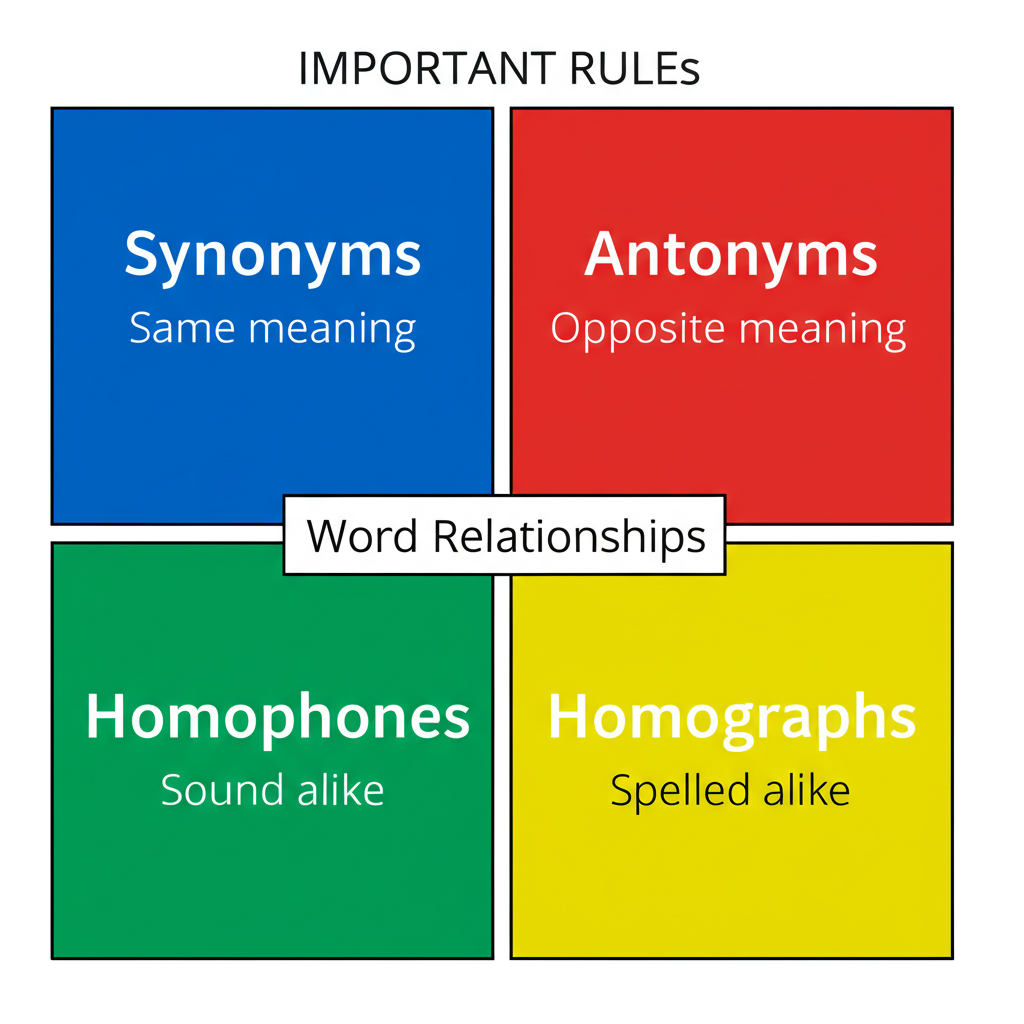
Many students define a word's literal meaning but ignore its emotional associations. "Cheap" and "affordable" have similar denotations but very different connotations — one suggests low quality, the other suggests good value. Always consider both dimensions when analyzing word choice.
Identifying literary devices without analyzing their effect
Simply saying "the author uses a metaphor" earns minimal credit. You must explain what is being compared, how it creates meaning, and why the author chose this device. Use the Identify → Quote → Analyze framework every time.
Using vague language in analysis essays
Phrases like "the author uses good words" or "this makes the reader feel things" are too vague. Be specific: name the exact words, identify the device, and explain the precise effect. E.g., "Orwell's use of 'hideous ecstasy' creates a disturbing oxymoron that conveys the monstrous nature of collective hatred."
Ignoring context when defining unfamiliar words
Students often skip over unfamiliar words or guess randomly instead of using context clues. Look for synonyms, antonyms, explanations, and tone indicators in the surrounding text before reaching for a dictionary.
Treating figurative language as literal
When Gatsby says Daisy's voice is "full of money," he doesn't mean literal coins. Figurative language always means something beyond the surface. Ask yourself: what is the author really comparing, and what does that comparison reveal about characters or themes?
Confusing simile and metaphor
A simile uses "like" or "as" to compare (e.g., "He fought like a lion"), while a metaphor states one thing is another directly (e.g., "Juliet is the sun"). Getting this distinction wrong on exams costs easy points.
8Quick Revision Summary
- ✓Denotation is a word's literal meaning; connotation is its emotional and cultural associations.
- ✓Use context clues (synonyms, antonyms, explanations, tone) to decode unfamiliar words before reaching for a dictionary.
- ✓The "Word Detective" method: Get the Gist → Identify Mystery Words → Check Context → Analyze Connotation → Determine Author's Purpose → Re-read.
- ✓Key figurative language: simile ("like/as"), metaphor (direct comparison), personification (human qualities), hyperbole (exaggeration), imagery (sensory language).
- ✓Literary devices to know: irony (verbal, situational, dramatic), symbolism, allusion, paradox.
- ✓The three rhetorical appeals: Ethos (credibility), Pathos (emotion), Logos (logic).
- ✓Diction (word choice) and syntax (sentence structure) are powerful tools authors use to shape tone, mood, and meaning.
- ✓Always use the Identify → Quote → Analyze framework when discussing literary devices in essays.
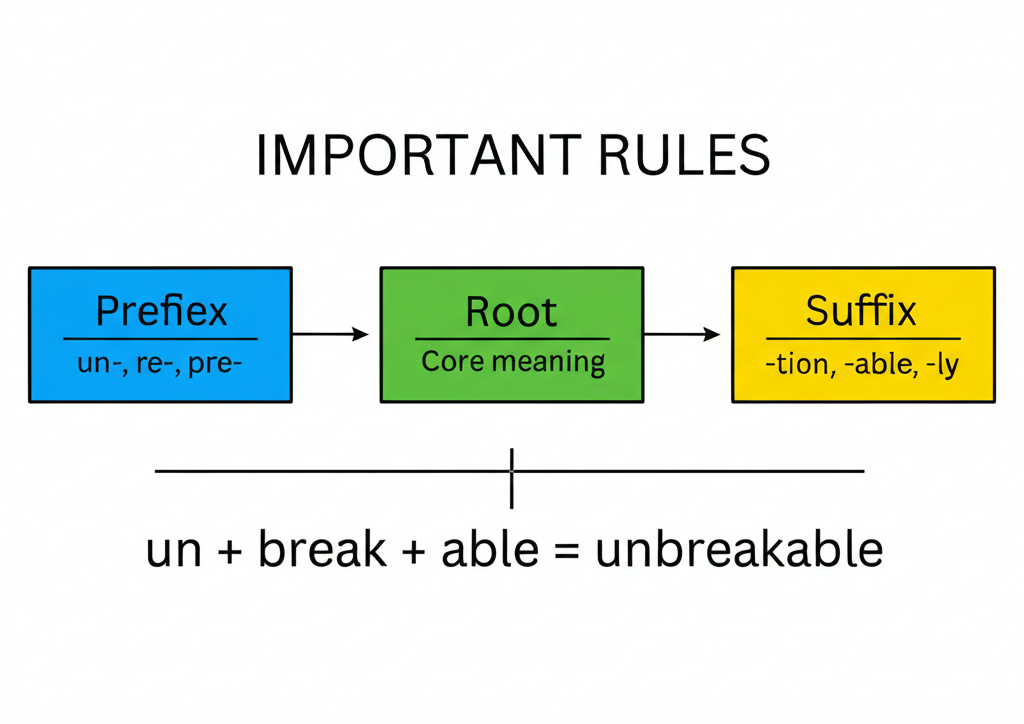
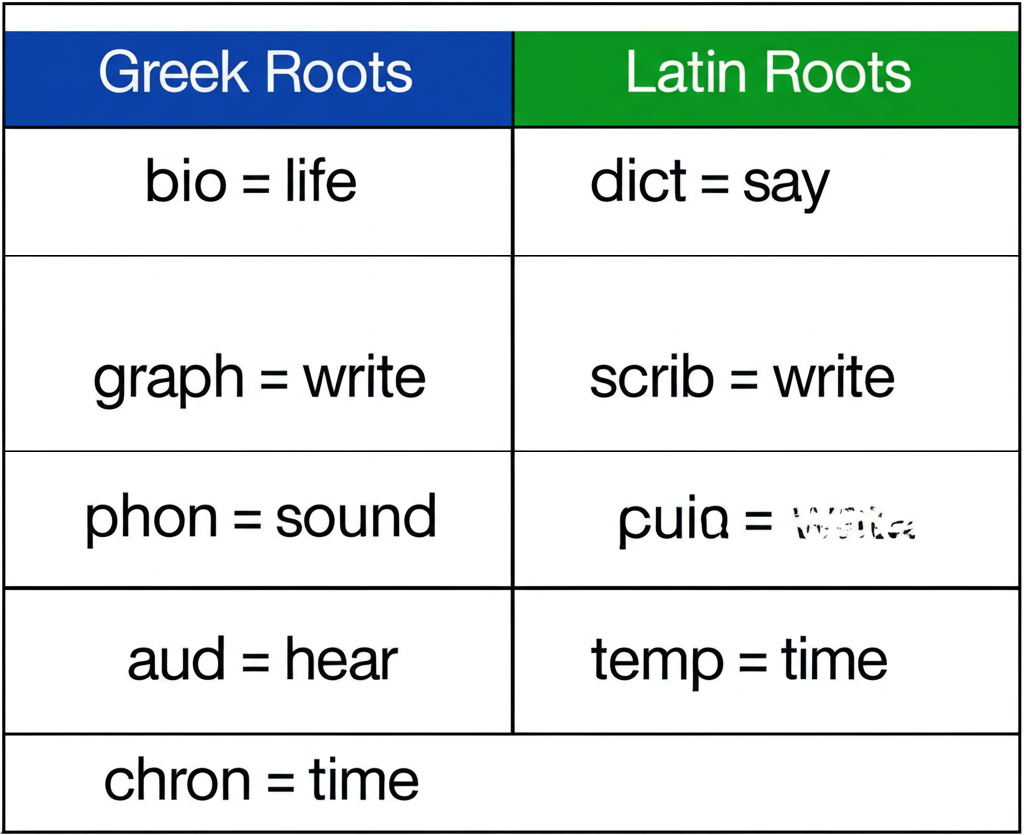
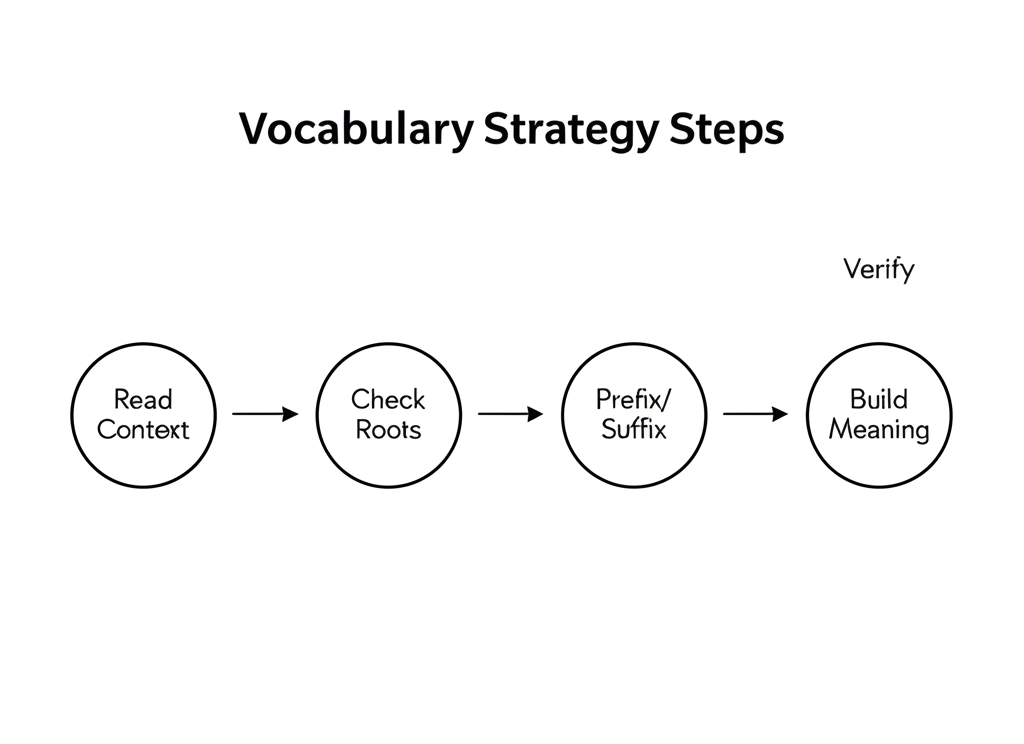
- ✓Greek and Latin roots, prefixes, and suffixes are powerful tools for decoding unfamiliar vocabulary.
- ✓Strong analysis explains how and why word choices create meaning — always answer the "so what?" question.
Frequently Asked Questions
- What is the difference between denotation and connotation?
- Denotation is the literal, dictionary definition of a word. Connotation refers to the emotional associations or cultural implications a word carries beyond its literal meaning. For example, "home" denotes a place where one lives, but it connotes warmth, security, and family. Understanding both is essential for analyzing authorial intent and word choice in literary texts.
- How can I figure out the meaning of an unfamiliar word without a dictionary?
- Use context clues from the surrounding text. Look for synonyms, antonyms, explanations, or examples near the unknown word. Consider the overall tone and situation of the passage. For instance, in "The garrulous student, who never stopped talking, was often asked to be quiet," the phrase "never stopped talking" reveals that "garrulous" means excessively talkative.
- Why is word choice (diction) so important in literary analysis?
- Diction — an author's specific word choices — shapes tone, mood, characterization, and theme. A single word can carry powerful connotations that influence how readers perceive characters and events. For example, describing someone as "slender" versus "skinny" versus "gaunt" creates very different impressions. Analyzing diction is central to close reading and strong essay writing.
- What are the most common literary devices I should know for exams?
- The most essential literary devices include metaphor (direct comparison), simile (comparison using "like" or "as"), personification (giving human qualities to non-human things), symbolism (objects representing abstract ideas), irony (contrast between expectation and reality), imagery (sensory language), and allusion (indirect references). Understanding how these devices create meaning is key to literary analysis on the SAT, ACT, and AP exams.
- How do I analyze figurative language in an essay?
- First, identify the device (metaphor, simile, personification, etc.). Then explain what two things are being compared or what effect is being created. Next, analyze the connotations of the key words. Finally, connect your analysis to the broader theme or character development. Always answer the "so what?" question — explain why the author's choice matters, not just what it is.
- What is the difference between a simile and a metaphor?
- A simile compares two unlike things using "like" or "as" (e.g., "He fought like a lion"), while a metaphor makes a direct comparison without "like" or "as" (e.g., "Juliet is the sun"). Metaphors tend to be more powerful because they assert that one thing IS another, creating a stronger imaginative connection.
- How do Greek and Latin roots help with vocabulary?
- Many English words are built from Greek and Latin roots, prefixes, and suffixes. Knowing common roots like "bene" (good), "mal" (bad), "dict" (say/speak), and "graph" (write) allows you to decode unfamiliar words. For example, knowing "mal" means bad helps you understand "malevolent" (wishing evil), "malfunction" (bad functioning), and "malicious" (intending harm).
Practice Quiz
Test your understanding — select the correct answer for each question.
1.According to the article, what is the primary difference between a word's denotation and its connotation?
2.In the example provided by the article, 'The garrulous student, who never stopped talking, was often asked to be quiet.' what context clue helps define the word 'garrulous'?
3.Which of the following sentences is an example of personification?
4.The 'Picture This' scenario in the introduction describes confidently dissecting a passage and articulating how word choices contribute to theme. What overarching skill does this scenario highlight?
5.A student is writing an essay and wants to convey that a character is extremely hungry. Which of the following sentences uses hyperbole effectively for this purpose?
6.A writer wants to emphasize the feeling of warmth, security, and family associated with a dwelling. Based on the article's examples, which word would be the most effective choice?
7.Which of the following statements best describes the purpose of 'Figurative Language' as defined in the article?
8.According to the introduction, how does mastering vocabulary and word study enhance 'critical thinking' abilities?
9.A student wrote, 'The politician's speech was very good.' To make the sentence more precise, which word would be the best revision for 'good'?
10.A student is confused between a simile and a metaphor. Which pair of examples best illustrates their difference?
Final Study Advice
- 1.Practice the "Word Detective" approach with every new text you read — it becomes second nature with repetition.
- 2.Keep a vocabulary journal — write down unfamiliar words, their definitions, connotations, and the sentence where you found them.
- 3.When analyzing literary devices, always follow Identify → Quote → Analyze. Never stop at identification.
- 4.Learn common Greek and Latin roots — they unlock the meaning of thousands of English words and boost SAT/ACT scores.
- 5.Read widely and actively — the more you encounter words in context, the stronger your intuitive understanding of language becomes.